




Our missions
As a public institution of a scientific, cultural and professional nature, UBO's primary missions are to contribute to the development of research and to raise the scientific, cultural and professional level of the nation and the individuals who compose it, to regional and national growth, to economic development and to the implementation of an employment policy. Finally, it contributes to the reduction of social and cultural inequalities.
The strengths that set us apart

Expertise in marine sciences
At the heart of climate change, the vulnerability of the ocean has become a priority research issue. At UBO, 500 scientists work on this every day, primarily at the IUEM , thus forming a recognized expertise. Indeed, UBO is ranked 14th for oceanographic research in the 2026 Shanghai Ranking.
European University with SEA-EU
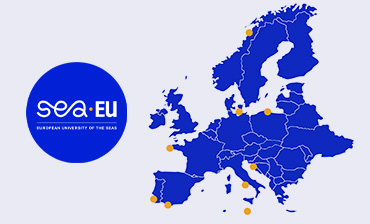
UBO is one of the nine universities in the SEA-EU alliance . Its goal is to provide a space for mobility and training for our students and staff. Our partners, all located on the Mediterranean coast, are: Cadiz, Gdansk, Malta, Kiel, Split, Naples, Faro, and Bodø.
Since its creation in 2019, the alliance has offered Blended Intensive Programs, research internships for Master's students, and financial support for mobility within SEA-EU universities.
Multidisciplinary university including an INP
All scientific fields are taught: arts, literature, languages, law, economics, management, humanities and social sciences, marine and coastal sciences, science and technology, and health.
Since March 2025, ESIAB, IAE, and ENIB have merged to form a national polytechnic institute, Bretagne INP, the 6th French campus joining Bordeaux, Clermont-Auvergne, Grenoble, Lorraine, and Toulouse.
Breton language and culture
The University of Western Brittany (UBO) plays a central role in promoting the Breton language through the research and training activities of the Breton and Celtic Research Centre (CRBC). The Breton language, a key element of Western Brittany's identity, represents a major cultural asset that must be preserved.
UBO is also a co-signatory, along with the three other Breton universities, of the "Specific Convention for the Transmission of Breton Languages and the Development of their Use in Daily Life 2022-2027".
Les Abords: contemporary art exhibition space
The exhibition space Les Abords aims to establish itself as a unique cultural hub in the region, cultivating a strong "arts & sciences" identity. Each year, it hosts four art exhibitions that resonate with the work of our laboratories and programs. Featuring both established and emerging artists, their works engage with the scientific challenges addressed by UBO, transforming Les Abords into a privileged meeting place for the university community and the general public, fostering discovery, exchange, and mutual inspiration.
UBO Foundation
The UBO Foundation was created within a broader context of strengthening the university's relationships with its socio-economic partners. It has several missions: to increase the university's attractiveness and influence; to support the development of research, innovation, and training; to establish synergies with socio-economic partners, particularly in the agriculture and agri-food sectors; to support students in realizing their talents, optimizing their professional integration, and fostering student entrepreneurship; and to promote the construction and development of an innovative and sustainable campus.
Our research successes
Launched in January 2023 within the ORPHY/UBO laboratory, the TrUeO2 (Oxygen Transport and Utilization) technology platform is dedicated to the real-time functional exploration of cellular energy metabolism. It combines human expertise and cutting-edge equipment to foster innovation and the development of scientific knowledge in this field. TrUeO2 offers a wide range of services adapted to all types of cells and tissues: viability studies, metabolic analyses (functioning or dysfunctioning), toxicity assessments, molecule screening, and more. Open to all research stakeholders (academic laboratories, companies, and startups) the platform supports projects at every stage.
The LIPIDOCEAN platform specializes in the in-depth analysis of marine lipids, exploring their diversity and complexity from the subcellular to the ecosystem level.
Building on over 25 years of research in this field, LIPIDOCEAN brings together a team of experts in chemistry, biology, and marine lipid analysis, supported by state-of-the-art analytical equipment. One of its major strengths lies in the development of original and high-performance separation methods, enabling the analysis of marine lipids at trace levels with exceptional resolution.
Given the inherent complexity of these molecules, LIPIDOCEAN has established itself as a leading institution in the field of marine lipid analysis.
The Ponant Living Lab, presented on the PEPR SOLU-BIOD program website, is an initiative focused on experimenting with and co-creating Nature-based Solutions in a complex coastal context. It operates across a territory stretching from the Brest harbor to the Iroise Sea, integrating the land-sea continuum through the Aulne and Élorn river basins. The main objective is to test and develop solutions for biodiversity conservation, coastal resilience to climate change, adaptation to risks (such as erosion or marine submersion), and improving the quality of life for local residents.
Of the 24 Innovation Hubs (PUI) launched in France in 2022, Blue Box is the only one focused on the ocean. It aims to position Brittany as a national driver of deep tech innovation. The Blue Box PUI supports the development of innovative projects, with a particular focus on Ocean Tech, in order to address major contemporary challenges. However, its scope is not limited to this area: all scientific and technological disciplines are involved.
The PUI Blue Box aims to bring laboratories and businesses closer together to foster the emergence of concrete and sustainable solutions. To this end, the PUI's support is structured around three main pathways: generating research results, initiating initial collaborations, and supporting the emergence and growth of start-ups.
Consortium of 11 actors: CNRS, Naval School, ENIB, ENSTA, Ifremer, IMT Atlantique, IRD, SATT Ouest Valorisation, SHOM, Technopole Brest-Iroise and Technopole Quimper-Cornouaille, under the coordination of UBO.
UBO provides its researchers and students with a range of equipment and qualified personnel to support the development of their research. These services are also offered to public research organizations outside UBO and to private companies. The equipment is grouped into five platforms: EPR-NMR, X-ray diffraction, mass spectrometry and the imaging and measurement platform for microscopy.
The Noz Breizh Chair, established in 2022 with the support of the UBO Foundation, is a transdisciplinary scientific consortium dedicated to the theme of night in Brittany. It aims to develop innovative scientific programs by combining several disciplines and territorial scales. It is organized around three main themes: dynamics of the night city; digital city and public lighting; and light pollution and the dark network.
These researchers also participate in the Darker Sky research project (Interreg North Sea) on light pollution. Artificial nighttime lighting, when too intense, poorly directed, or used inappropriately, is now widely recognized as an issue that transcends regional borders and constitutes a major source of environmental pressure. It contributes to the erosion of biodiversity and the fragmentation of habitats. Reducing this light pollution, as well as preserving ecosystems, requires transnational cooperation and shared governance.
OSPAPIK develops novel approaches to pollution by combining Indigenous knowledge and artistic practices, while emphasizing materiality and how individuals relate to waste. The project analyzes how artistic expression allows artists, scientists, maritime expedition organizers, and the public to better understand the impact of waste and debris on marine and space ecosystems. It also aims to explore the extent to which the study of art informs the understanding of the various professional sectors and stakeholders involved in pollution cleanup efforts. One of the central questions guiding this research is: to what extent can art reveal the effect of pollution and waste on societies' relationship with the ocean and space?
The ASCET project (Aesthetic and Social Constructions of the Energy Transition) examines how the climate emergency and the energy transition are represented in the arts, literature, and media. It focuses on the links between words and images, the political and cultural objectives that shape these representations, and how they contribute to legitimizing renewable energies. The study thus explores the influence of infrastructure such as hydroelectric power plants and wind farms on our perception of coastal and marine spaces, as well as the transformations in representational practices implemented by artists, writers, energy companies, and governments in a context where the energy transition is profoundly redefining our cultural and temporal relationships to space. ASCET aims to promote an aesthetic transition that can accompany energy changes at different scales, to offer a theoretical framework that allows us to move beyond simplistic oppositions between "good" or "bad" technologies, progress and stagnation, technophobia and techno-utopianism, and to produce educational and scientific resources accessible to the widest possible audience.
Our innovative training programs
The SEA-EU alliance
By combining the efforts, expertise, and skills of nine partner universities in Croatia, Germany, France, Malta, Poland, Spain, Italy, Norway, and Portugal, SEA-EU will explore, develop, and share multidisciplinary knowledge as a platform representing sustainable development in Europe. Extensive mobility (international, intersectoral, and virtual) within the alliance will be implemented for both students and staff, thereby promoting multilingualism and multiculturalism.
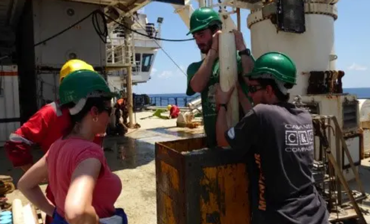
Isblue University Research School
The Interdisciplinary Graduate School for the Blue Planet (ISblue) is a university research school created to address the ever-increasing challenges facing ocean and coastal ecosystems. It also aims to train the next generation of innovators and scientific leaders in oceanographic research to meet the growing needs of the blue economy through high-level, research-oriented education.
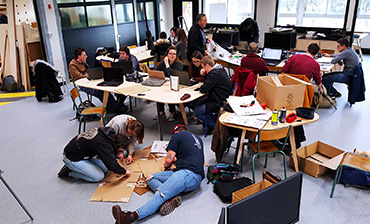
UBO Open Factory
Inspired by the "fab lab" model, the UBO Open Factory is a 300m² open, multidisciplinary innovation laboratory. Open to all UBO students, staff, and external visitors, it is equipped with traditional tools and digitally controlled machines (3D printers, laser cutters, etc.) for rapid prototyping. Managers offer innovation training and support project leaders, and events such as conferences and creative marathons are organized to foster connections. Students from different disciplines come together to brainstorm current societal challenges (sustainable development, disability, cities in transition, culture, etc.).
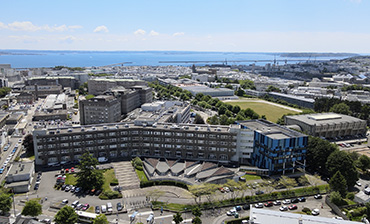
First French faculties of midwifery and speech therapy
This is a first: two disciplines, previously classified as schools or departments, have been granted the legal status of faculties, also known as UFRs (Unité de Formation et de Recherche – Training and Research Unit). This new designation is a game-changer, allowing these professors to conduct research programs independently, without being affiliated with other disciplines.

The latest open training courses
The opening of a new training program, resulting from extensive discussions and negotiations with numerous partners, is always a success, both for the youth of a region and for its development.
- Bachelor of Political Science
- International Master's in Sustainable Organizational Transition and Resilience Management (STORM)
- Master 2 Law and Digital Governance
- Professional license in Maintenance and Piloting of ROVs (Remotely Operated Vehicles) and maritime drones
- BUT GEII (French Navy) program within the Electrical Engineering and Industrial Computing (GEII) department of the Brest-Morlaix University Institute of Technology (IUT)
A campus life designed by and for all our audiences

UBO inclusive: "Tous EGO" program
In response to the call for projects “demonstrator inclusive universities” from the Ministry of Higher Education and Research launched in early 2024, UBO is deploying “Tous EGO: Together to Grow and Open” : an ambitious project to strengthen the reception and inclusion of students with disabilities within the university.
The Student Solidarity Incubator - PEPSE
Located beneath the Bouguen University Library, PepSE is a shared space open to students and student associations across the university. Serving as a workspace, relaxation area, and meeting place, it fosters social connections with the aim of combating isolation, enlivening the campus, and opening it up to the city. Throughout the year, and especially during off-peak periods (evenings, weekends, holidays), PepSE offers free activities: creative workshops, outings, games, and more.

RESSAC Arts and Sciences Festival
The RESSAC Festival combines artistic culture and scientific research by offering free access to around forty shows, exhibitions, films, immersive experiences, concerts, sound installations, and conferences, allowing everyone to discover the processes of research and creation in "arts and sciences." This blend of arts and sciences stems from encounters between scientists and artists, who create a new way of understanding the world by harmonizing knowledge and emotion. This national event takes place every two years on the UBO campuses and also in numerous cultural venues throughout the city.
UBO is on the move! Creation of a University Sports and Health Center
A sports and health center will open its doors in September 2025. It will be the third of its kind in France within a university setting, after Paris and Nîmes. Bringing together several university services, it offers a personalized program with activities adapted to each individual, designed to improve their physical and mental health. It is intended for anyone wishing to resume physical activity, with or without a chronic illness or disability.

A dynamic work environment dedicated to sustainable development and social responsibility
The university's various departments are all mobilized to meet the objectives of an ambitious institutional strategy, comprised of several master plans:
- A more sustainable university
- A university dedicated to the success and personal development of its students
- A committed and exemplary university in terms of equality between women and men and the fight against gender-based violence
- A university at the heart of digital transitions